Document upload failures in your ERP can disrupt finance, compliance, and operations workflows. Learn how to restore DMS functionality quickly using the sequence check utility built into Onfinity ERP.

Document upload failures in your ERP can disrupt finance, compliance, and operations workflows. Learn how to restore DMS functionality quickly using the sequence check utility built into Onfinity ERP.
Finance teams handle month-end adjustments, accruals, and error corrections through manual GL journal entries. Onfinity ERP structures this workflow with built-in controls, automated reversals, and dimension support to maintain accuracy and audit readiness.

Exchange rate fluctuations leave recorded foreign currency balances outdated by month-end. Learn how Onfinity ERP automates foreign currency revaluation, calculates unrealized gains and losses, and posts accurate journal entries without manual intervention.
ERP administrators need precise control over which document actions appear on each screen. Onfinity ERP lets you configure upload, view, and attachment buttons at the screen level—so procurement, finance, and operations teams see only the tools they need.
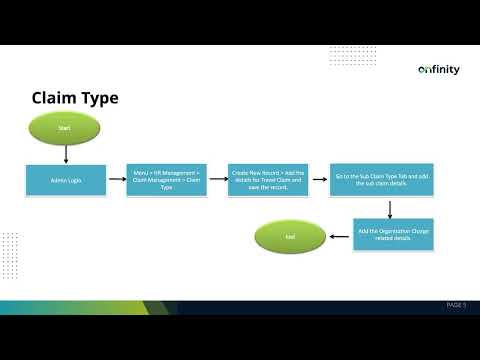
Finance and HR teams managing employee reimbursements need structured claim classification to control costs and ensure accurate posting. Onfinity ERP enables administrators to configure claim types, subclaims, and organization charges that align with both corporate policy and financial reporting requirements.
Finance teams managing payments across multiple bank branches need a centralized approach to prevent errors and speed up reconciliation. Proper bank account configuration in your ERP creates the foundation for automated check sequencing, payment file generation, and statement loading without manual intervention.
Finance teams often need customized reporting views that differ from the standard chart of accounts structure. Learn how Onfinity ERP enables flexible financial reporting hierarchies without disrupting your core accounting setup.

Configuring attendance eligibility and time format settings correctly ensures that your ERP captures accurate workforce data, applies the right policies to the right employees, and eliminates timezone discrepancies that affect payroll. Learn how to set up these foundational controls in Onfinity ERP.
Finance teams face recurring challenges when deciding whether asset improvements should be capitalized or expensed. Onfinity ERP automates the asset enhancement workflow, from recording upgrades to recalculating depreciation and generating accounting entries.
When standard ERP modules don’t fit your business processes, custom tables become essential. Learn how Onfinity ERP enables administrators to define new database structures, columns, and validation rules while maintaining data integrity and system stability.
Learn how folder creation, subfolders, and permission inheritance in Onfinity ERP’s DMS help finance and operations teams organize business documents, control access, and maintain compliance without constant manual reconfiguration.

Finance teams waste hours manually entering cash receipts into journals. Onfinity ERP’s payment form interface automates journal creation, handles multicurrency transactions, and supports complex allocation scenarios in a single workflow.
Most ERP customizations take months because every screen requires manual coding and testing. Model-driven architecture changes that by generating screens from a central data dictionary, letting finance and operations teams configure fields, workflows, and reports without waiting on developers.

Finance teams using traditional cash journals spend unnecessary time toggling between invoice screens and payment entry forms. Onfinity ERP’s payment form consolidates invoice selection, cash allocation, and cashbook updates into a unified workflow that reduces errors and improves processing speed.

Learn how Onfinity ERP enables finance and operations teams to enforce validation rules, automate calculations, and control data workflows using X-classes and M-classes—without extensive custom development or ongoing maintenance overhead.

Inconsistent performance evaluations create fairness concerns and undermine talent decisions. Learn how configuring standardized rating scales in Onfinity ERP ensures objective, defensible performance measurement across all departments and teams.
Many HR teams still manage employee records, transfers, promotions, and compliance documentation across disconnected tools. A unified workforce management system built into an ERP platform like Onfinity eliminates data silos and manual handoffs, giving teams a single source of truth for both employee information and HR processes.
Learn how Onfinity ERP’s mosaic library enables business users to configure personalized, role-specific dashboards through dynamic widgets—without requiring developer support or technical knowledge.

Hard-coded ERPs trap business logic in source code, making every GL change a development project. Model-driven architecture lets finance teams modify workflows, survive upgrades intact, and scale to new subsidiaries without duplicating code.
Tab panels in Onfinity ERP let teams view related data from multiple sources on a single screen, eliminating the need to switch between tabs or open separate windows. This feature reduces navigation time and improves visibility into order details, customer information, and transaction summaries.