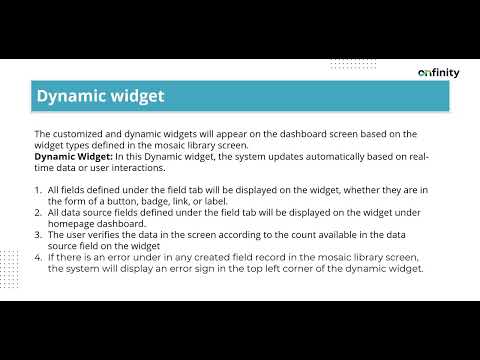
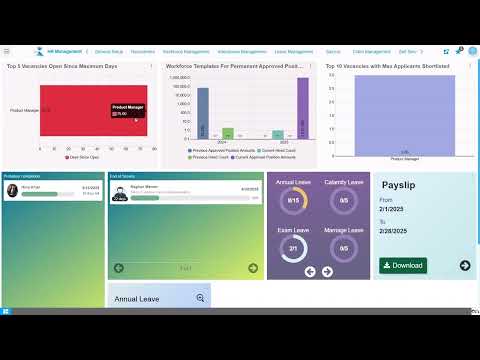
ERP dashboards often force users to navigate multiple screens to find critical information. Dynamic dashboard widgets in Onfinity ERP surface real-time data tailored to each role, reducing clicks and accelerating daily workflows.

ERP dashboards often force users to navigate multiple screens to find critical information. Dynamic dashboard widgets in Onfinity ERP surface real-time data tailored to each role, reducing clicks and accelerating daily workflows.

Finance teams often waste time toggling between invoice screens, payment records, and reconciliation tools when processing checks. A unified payment form eliminates that friction by handling invoices, sales orders, and GL journals in one workflow.
Blanket sales orders simplify recurring customer deliveries by locking pricing and terms upfront, then releasing monthly quantities without rework. Onfinity ERP connects quotation, release scheduling, delivery confirmation, and invoicing in one traceable workflow.

Finance and operations teams can embed Crystal Reports directly into ERP workflows for on-demand printing and reporting. Learn how Onfinity ERP preserves existing report investments while modernizing access through menu-based printing, custom buttons, and transaction-level integration.

Onfinity ERP automates document activity tracking with built-in reporting screens that log uploads, monitor indexing status, track sharing activity, and maintain audit trails—giving administrators real-time visibility without manual logging.
Learn how configuring selection rounds in your ERP creates consistent hiring stages, reduces coordination overhead, and improves visibility across multi-step recruitment workflows.
Managing employees who join or resign mid-month creates complexity in standard payroll cycles. Onfinity ERP automates pro-rated salary calculations, enables immediate settlement for resignations, and lets HR fix individual payroll errors without reprocessing entire runs.

Configure organizational and regional holidays in your ERP system with direct integration into payroll calculations and leave processing. Learn how proper holiday calendar setup eliminates manual tracking and prevents calculation errors across distributed teams.
Managing contracts, employee records, and invoices across disconnected folders creates retrieval delays and compliance risks. Learn how document management systems inside ERP platforms centralize storage, automate version tracking, and secure access—turning scattered files into structured workflows.
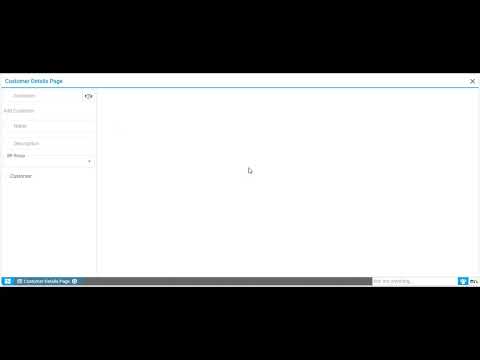
Standard ERP customer screens often lock data into rigid views. Learn how custom pages with data grid binding enable finance and operations teams to display, save, and manage customer records with real-time database integration tailored to their workflows.
How a physical inventory count runs in Onfinity ERP: the count structure, two ways to post a discrepancy, real-time stock by warehouse, and the adjustment flowing through to the ledger.
Setting up work centres in Onfinity ERP: what to configure first, how a work centre maps to a line, a machine group or a team, and how resources link to locations.
Payroll component classification organizes earnings, deductions, contributions, and leave data into structured categories that ensure accurate processing, reduce calculation errors, and simplify reporting across HR and finance operations.
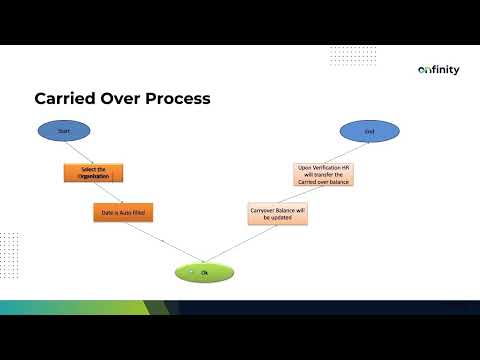
Manual leave calculations and year-end carryovers create unnecessary work for HR teams. Learn how automating leave accruals, carryover balances, and employee requests in an ERP system improves accuracy and reduces administrative time.
Document upload failures in your ERP can disrupt finance, compliance, and operations workflows. Learn how to restore DMS functionality quickly using the sequence check utility built into Onfinity ERP.
Finance teams handle month-end adjustments, accruals, and error corrections through manual GL journal entries. Onfinity ERP structures this workflow with built-in controls, automated reversals, and dimension support to maintain accuracy and audit readiness.

How period-end foreign currency revaluation works in Onfinity ERP: which open items are picked up, how unrealised gains and losses are calculated and posted, and the audit trail.
ERP administrators need precise control over which document actions appear on each screen. Onfinity ERP lets you configure upload, view, and attachment buttons at the screen level—so procurement, finance, and operations teams see only the tools they need.
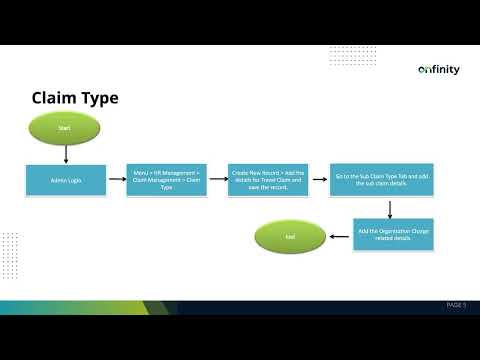
Finance and HR teams managing employee reimbursements need structured claim classification to control costs and ensure accurate posting. Onfinity ERP enables administrators to configure claim types, subclaims, and organization charges that align with both corporate policy and financial reporting requirements.
Finance teams managing payments across multiple bank branches need a centralized approach to prevent errors and speed up reconciliation. Proper bank account configuration in your ERP creates the foundation for automated check sequencing, payment file generation, and statement loading without manual intervention.