Onfinity ERP · India
One open source ERP for India. Everything connected.
Accounts, stock, production, sales, purchase and payroll in one place, with GST and e-invoicing built in. Made for Indian companies that have outgrown separate systems.
Book a demo See what is in itFor the plant
Made for companies with a factory to run
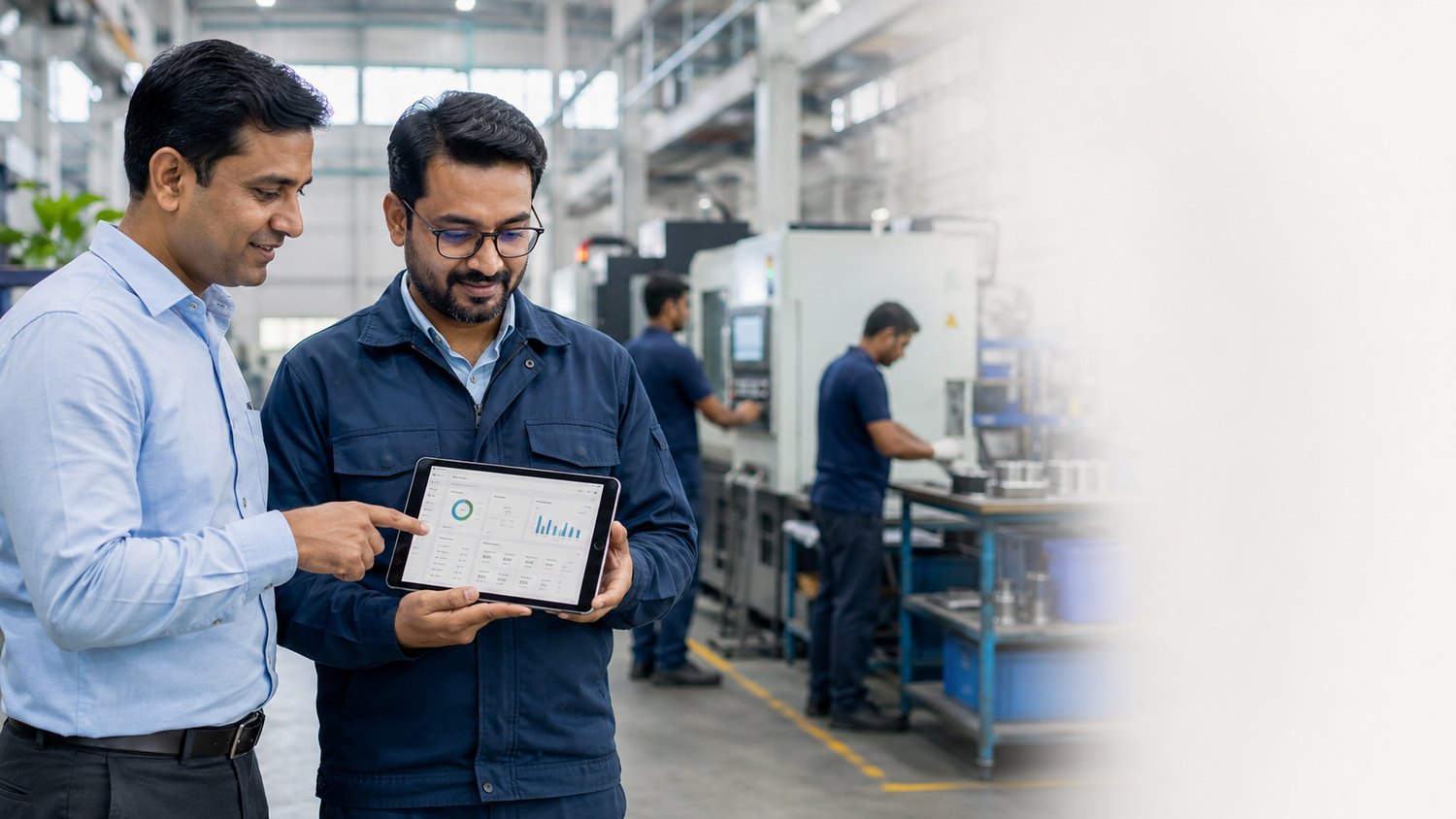
Most Indian companies running Onfinity have a factory. What a plant needs is part of the standard system, not a second product you buy later and join up yourself.
What goes into a product
Bills of material with as many levels as the product has. The version you built on is the version it gets costed on.
What runs when
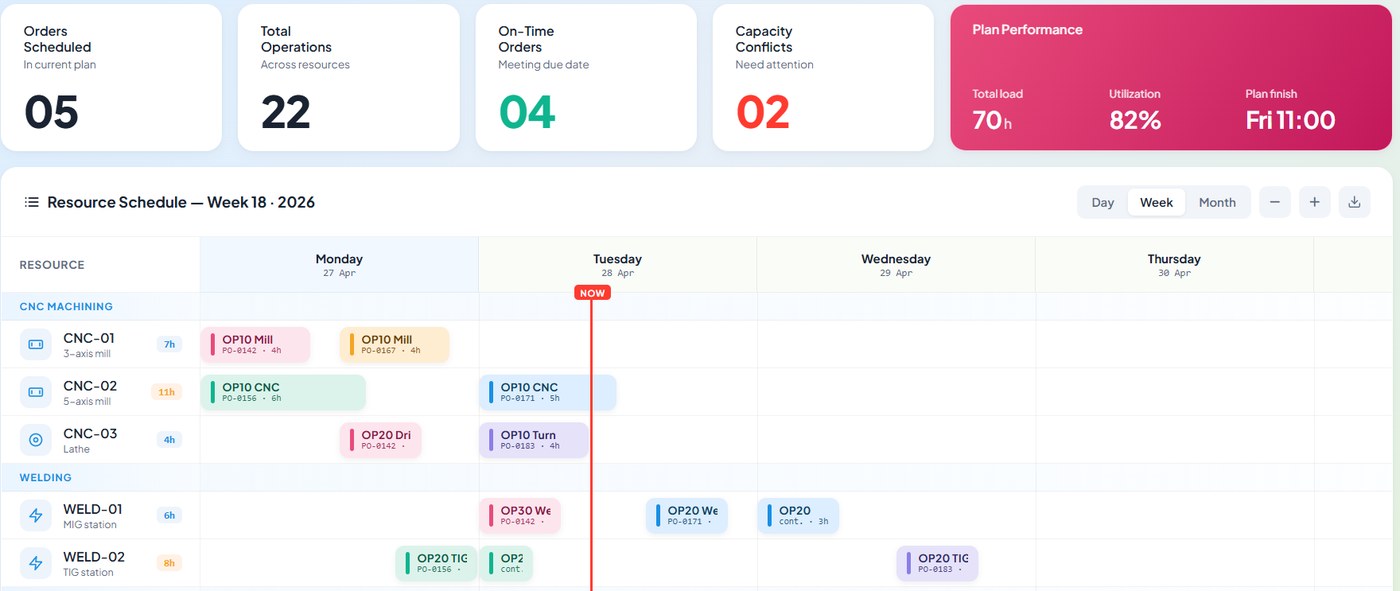
Which order, on which machine, on which day. Where two jobs want the same machine at the same time, it shows before it costs you.
Job work and job cost
Material you send out stays on your books and comes back against the same order. Labour, machine time, scrap and rework all land on the job.
Made for India
GST is worked out on the invoice
No spreadsheet afterwards. No copying numbers back from the portal. CGST, SGST and IGST land on each line, and the IRN comes back to the same invoice that asked for it.
e-Invoice
One button on the invoice. The IRN and the signed QR code come back onto it. If the portal says no, it says why. Cancelling is the same screen.
e-Way bill
Raised from the invoice, or from a stock transfer when goods move between your own godowns and there is no invoice to raise it from.
The other rules
Reverse charge. Supply that carries no tax. TDS on the payment as well as on the bill. TCS. HSN and SAC codes on the item. An MSME tag on the vendor.
Payroll
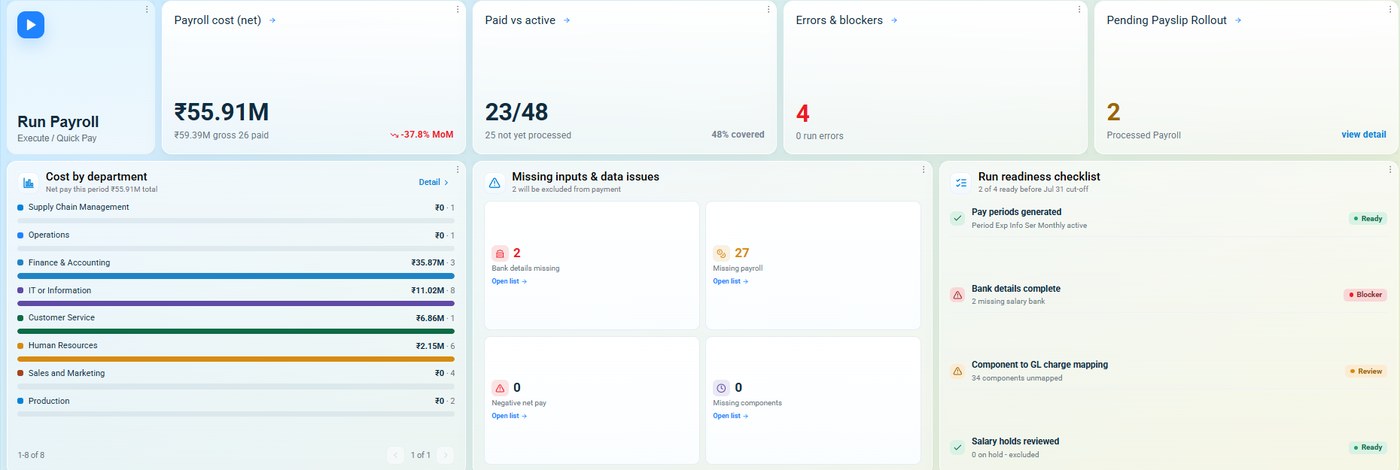
PF, ESI and professional tax, on the payslip
Payroll is the deepest part of Onfinity. The Indian deductions are inside it and behave like every other pay component: set up once, then applied by rule every month.
Provident fund
UAN and PF number on the staff record. Employee and employer share as a percentage or a fixed amount.
ESI
Cover flag and ESI number against the employee, worked out in the same run as the rest of the payslip.
Professional tax and gratuity
Professional tax as its own deduction. Gratuity keeps the employee share, the employer share and the final settlement apart.
Already running Workday or SAP for HR? Neither processes payroll in India. Indian payroll that plugs into the HR system you already have ›
The rest of the system
Eighteen more modules, all joined up
Each one has its own page. They share the same customers, items, documents and accounts, so what one records the next one can read. Nothing is copied across.
Nobody starts with all of it. Most begin with accounts, stock and one more area, then add the rest over the next year or two. It is all already in the system, so adding a part means switching it on rather than buying and joining another product.
Where it starts
Set up for your industry, before the first meeting
A template is the standard system with the accounts, document types, units and steps an industry already works with. It shortens the argument at the start of a project.
When you get bigger
Three modules most companies add later
These matter once there are several companies, a proper buying department, or a warehouse too big to run from memory. They are in the same system, waiting.
Nothing here needs a different edition or a second system. They are switched on when the business reaches them.
Bring one invoice. And one payslip.
A sales invoice, a purchase bill and a payslip are enough to see the GST split, the IRN and the deductions on your own numbers rather than on a slide.
Book a demo Find a partnerUseful to have ready
- One sales invoice, ideally to another state
- One purchase bill where TDS was cut
- A payslip with PF, ESI and professional tax on it
- How many people would use the system