Purchase · India
From the indent to the payment
Indent, quotes, order, receipt, bill, payment. Each one made from the last. GST on the bill, TDS off the payment, and MSME vendors flagged before you pay them.
Book a demo How receiving worksThe trail
Purchase to pay: six documents, each made from the last
Nobody retypes anything. The quantity on the bill is the quantity that arrived. That gets checked against what you ordered.
- Indent
- The requisition. Who asked, for what, against which budget. And who signs it off before it becomes an order.
- Quotes
- One enquiry, several vendors. Their replies come back on one screen instead of in an inbox.
- Purchase order
- Raised from the indent, or from the quote that won. The vendor's price list does the sums.
- Goods receipt
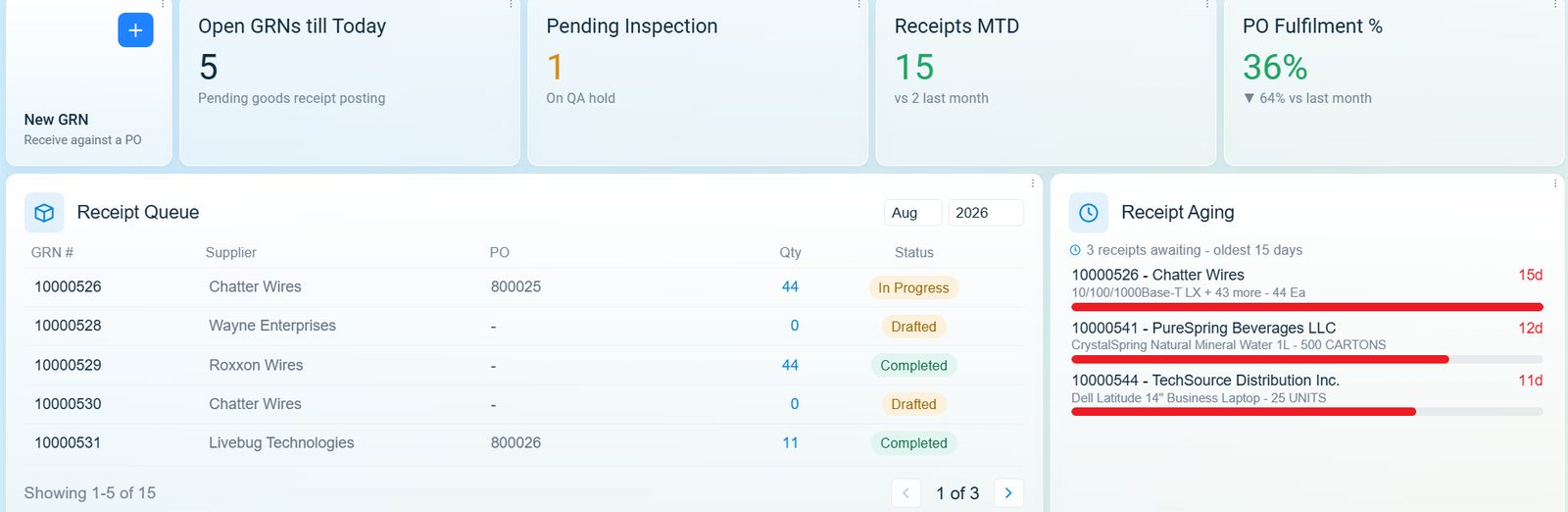
- Made against the order. Short deliveries and rejects show as a difference instead of being absorbed.
- Bill
- Matched to the order and the receipt before it can be paid. Ordered, arrived, charged for.
- Payment
- TDS off. MSME terms kept. The payment joined to the bill it settled.
At the gate
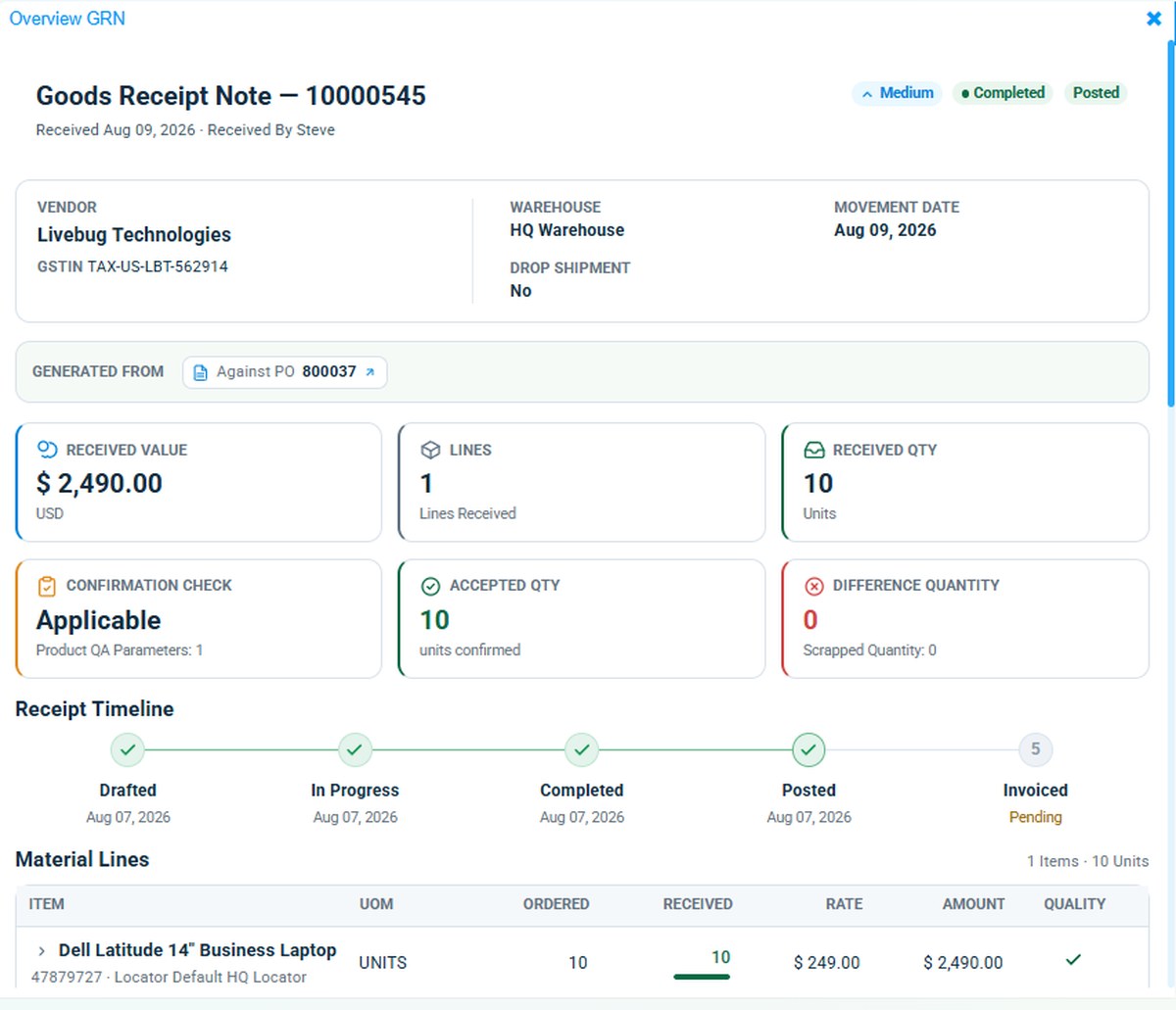
Goods receipt note: what arrived against what was ordered
The receipt is made from the order, so the system compares the two. Nobody stands there with the challan in one hand and the order in the other. What is short, or rejected, is recorded as a difference.
Quality
Quality checks at the gate, not on the line
The quality plan belongs to the item, not to whoever is on duty. The receipt gets checked against it. What fails is written down as rejected.
A plan per item
Named checks, held against the product and approved before use. The same checks every time, whoever does them.
Accepted and rejected stay apart
The receipt keeps two numbers, not one. A short delivery and a failed batch are different problems.
It sticks to the vendor
Every check adds to that vendor's record. Their rating is built from receipts, not from opinions.
That is what makes the difference quantity worth looking at. If rejects are never written down, the vendor sending ten per cent scrap and the vendor sending none look the same at year end.
The Indian part
GST, TDS and MSME: what Indian procurement adds
The hard part is not the buying. It is what has to be true about the bill and the payment afterwards.
GST on the way in
The split on the purchase bill, and the input credit against it. Reverse charge where it applies. The HSN or SAC code comes off the item.
TDS off the payment
Set the rule up once and say where it applies. Bills and payments then cut it themselves. The vendor's PAN sits on the vendor.
MSME vendors
Tagged on the vendor record. The ones you have to pay sooner show up before the payment run, not after it.
If you import
Landed cost: what the part cost to get here
The supplier's invoice is the small part. Duty, sea freight, insurance and the clearing agent's bill belong on the item too. Until they are on it, your margin is a guess.
- The cost comes off a real bill
- A line on the freight invoice, or on the agent's bill. Not a figure somebody estimated at month end.
- It lands on the right receipt
- Spread across the goods receipt lines those charges covered. Down to the lot, where the item is tracked that way.
- Six ways to spread it
- By quantity, value, weight, volume, line or cost. Sea freight goes on weight or volume. Duty goes on value. One method cannot do both.
- Then the item costs what it cost
- Stock value, the margin on a quotation, the cost on a work order. All three read the landed figure, not the supplier's price.
The vendors themselves
Vendor rating: who delivers, and who says they will
Buying gets decided on price, because price is the number everyone has. The rest can be known too.
Rated on the record
Quality and delivery ratings kept on the vendor, next to the terms and the tax details.
Compared side by side
One enquiry out to several vendors. Their answers read on one screen, with quantities and prices lined up.
Priced by agreement
Vendor price lists with their own dates. The order carries the rate that was agreed, not the one somebody remembers.
Bring one order and the bill against it.
Enough to see the receipt matched to the order, the TDS come off the payment, and the input credit land where you expect.
Book a demo See the whole systemUseful to have ready
- An order, and the bill raised against it
- One bill where TDS was cut
- How many vendors, and how many are MSME
- Whether you import, and who clears for you