Inventory · India
Inventory management for Indian warehouses
Stock in more than one godown. Material at a job worker. Goods on a lorry with an e-Way bill against them. This is the system that keeps one number for all of it.
Book a demo The e-Way billThe number people argue about
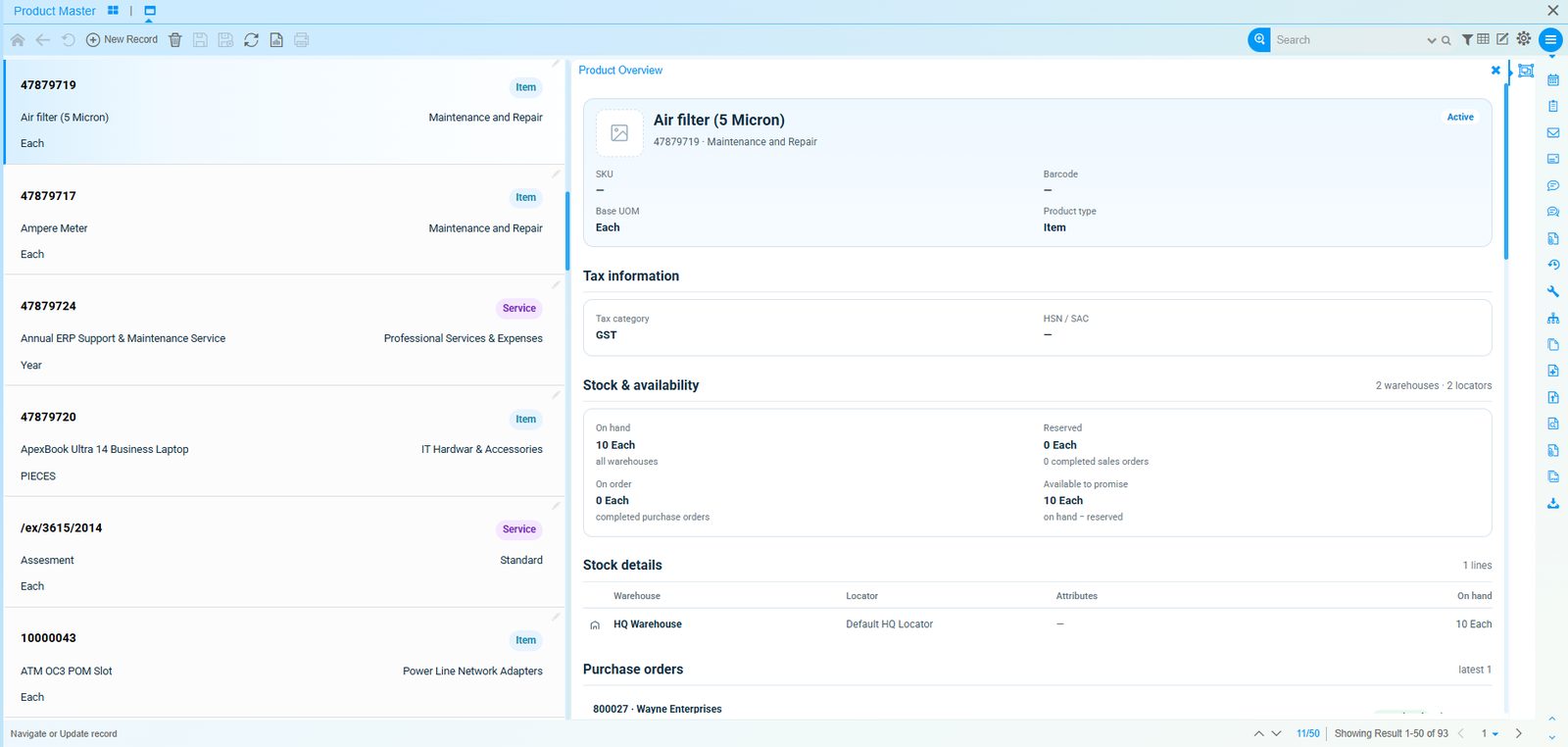
On hand, reserved, on order — three different numbers
Most arguments about stock are really an argument about which of these three somebody meant. The product record shows all three, and the HSN or SAC code sits on the same screen.
- Promise a date you can keep
- Available to promise is on hand minus what is already committed. Sales quote from that figure, not from the total.
- Godowns, and bins inside them
- Warehouses sit under companies and bins sit under warehouses. Two branches counting separately still add up.
- Stock at a job worker is still yours
- Material sent out for plating or machining stays visible as your stock. How job work is costed.
Before the lorry leaves
e-Way bill: raised from the despatch, and cancelled from it
Goods do not leave an Indian godown without one. Onfinity raises the e-Way bill from the delivery going out, so the bill and the movement describe the same lorry.
- Cancelling, not only generating
- A trip that does not happen has to be cancelled in time. That is done from the same delivery, by the person who knows it was called off.
- One record underneath
- The stock movement, the e-Way bill and the invoice come from the same delivery. What left the godown and what the customer was charged cannot disagree.
- The tax follows the destination
- CGST and SGST inside the state, IGST across it. Decided by where the goods are going, not by the person typing.
Goods in
Goods receipt note: what arrived against what was ordered
Nothing gets paid for goods that never arrived. The receipt is made against the purchase order. Short deliveries stay visible instead of being tidied away at month end.
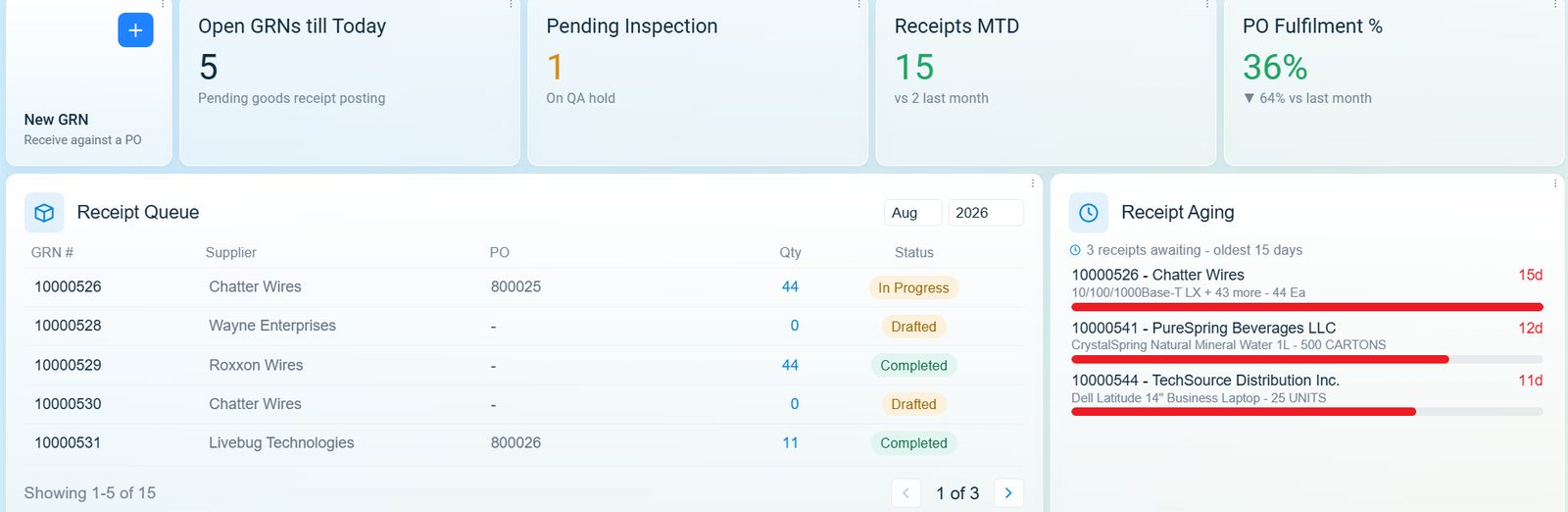
Material can be held for inspection before it counts as stock. What fails goes back to the supplier against the same receipt. The debit note and the rejection are one story.
What the stock is worth
Landed cost on the item, not in a separate expense account
An imported part costs more than the invoice from the supplier. Freight, duty, insurance and clearing go onto the goods themselves. There are six ways to split them. The item then costs what it really cost.
- Choose how the value is held
- Standard cost, average, FIFO and the rest. Pick one and every report agrees with every other.
- The valuation reaches the ledger
- Stock value on the balance sheet comes from the same movements as the stock report. There is no month-end reconciliation between them.
- Slow stock is visible before it is a write-off
- Ageing by item and by godown, so the decision happens while the material is still worth something.
When somebody asks
Batch and serial traceability, both directions
A customer reports a fault. You need the batch, the supplier it came from, and every other customer who got that batch. That question has to be answerable in minutes.
- Forwards, to the customer
- From a batch to every delivery it went out on.
- Backwards, to the supplier
- From a finished item to the batches of material that went into it.
- Expiry where it matters
- Batches carry dates, so the oldest goes first and nothing quietly passes its date on a rack.
The item master
What moves, and what has not moved in a month
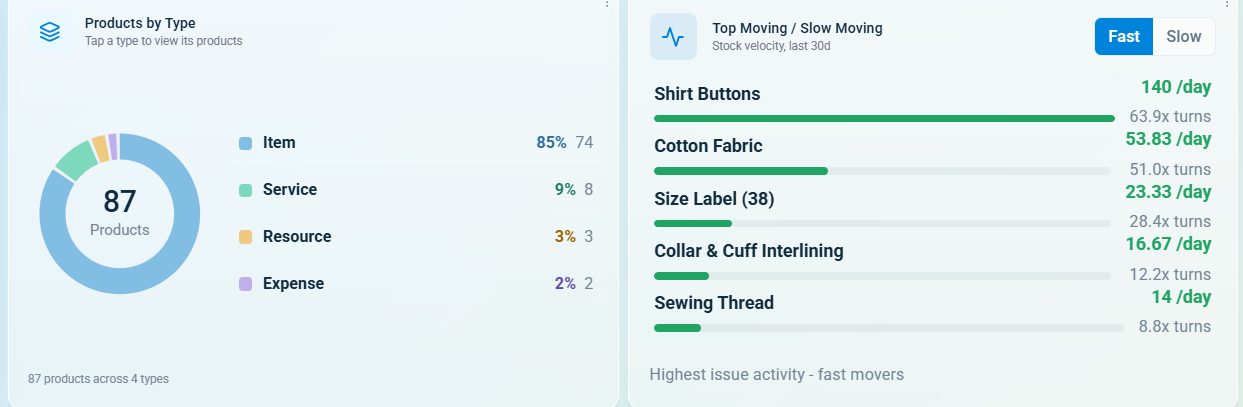
The catalogue is not a list. It is ranked by how fast things move, so the fast items and the dead ones are both obvious.
Bring one stock count that did not agree.
The item, the godown, what the system said and what was on the rack. The reason is usually one of four things, and it is usually visible in ten minutes.
Book a demo Editions from ₹1,999Useful to have ready
- How many godowns, and who counts each one
- Whether stock at a job worker is on the books today
- How the e-Way bill gets raised at the moment
- What an imported part is costed at