Finance · India
The ledger already knows about GST and TDS
CGST and SGST, or IGST, decided by where the goods go. TDS cut on bills and on payments. Assets on written down value. A year that ends in March.
Book a demo See the whole systemWhere the tax comes from
GST: same goods, different state, different tax
Where the goods go decides it. Within your own state the tax splits in two. To another state it becomes one line. Nobody picks it from a list.
Same money either way. What changes is who gets which half, and that is the part people get wrong by hand. The rate comes from the item's HSN or SAC code. Reverse charge and nil-rated supply are settings, not things somebody has to remember.
Money coming in
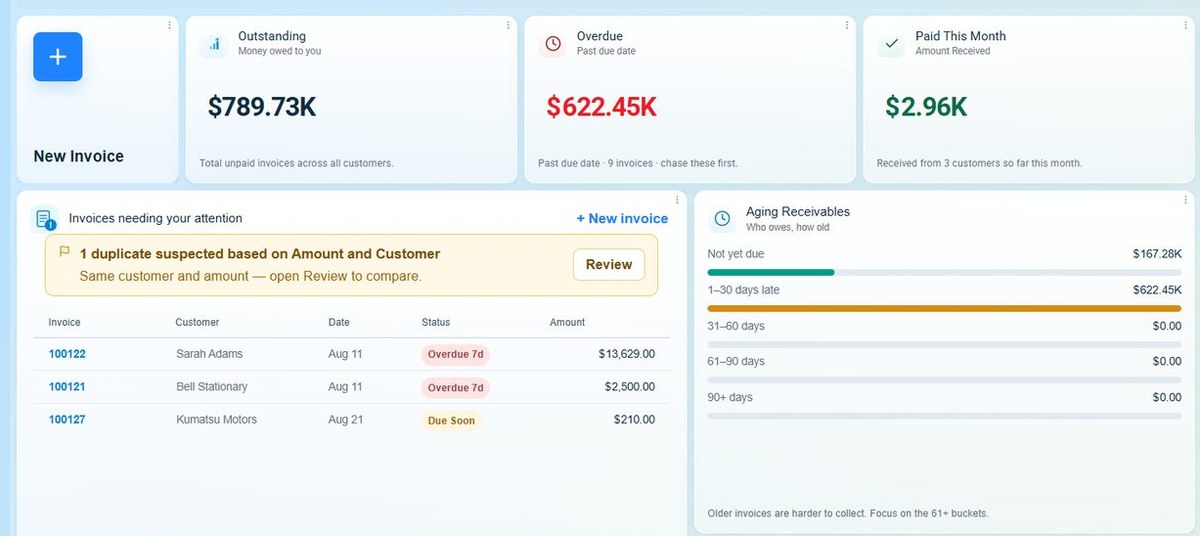
Accounts receivable: who owes you, and for how long
Every unpaid invoice, sorted by how late it is. The oldest ones are the hardest to collect, so they are the ones on screen.
Money going out
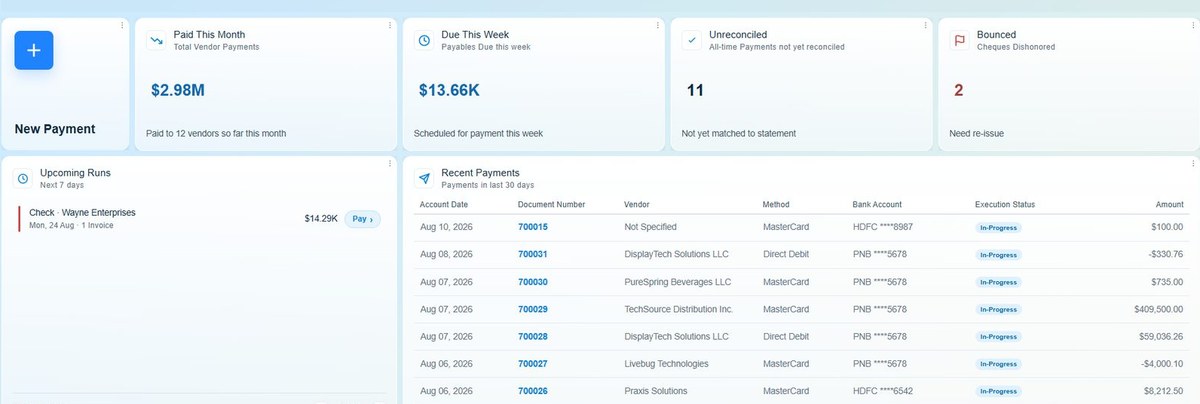
TDS comes off before the payment goes
Set the rule up once. Every bill and every payment then uses it. No separate working, and no month where somebody forgets.
A rule, not a sum
A rate and where it applies: buying or selling, which category, which state. Bills and payments work the deduction out themselves.
On the bill or on the payment
Each rule says which one it belongs to. So an advance and the final bill are not both cut.
PAN, TAN and MSME on the vendor
Kept on the vendor, next to the payment terms. The PAN you deduct against and the MSME tag are in the same place.
The books themselves
The accounting underneath everything the tax sits on
The tax is only as good as the books under it. This is a real general ledger, not a sales system with accounts bolted on.
- General ledger
- Journals and a chart of accounts you set up once and use for every company you run.
- Payables and receivables
- Bills, payments, receipts, credit notes and ageing. Posted as they happen, not overnight.
- Bank and cash
- Statements load from the bank and match themselves against what is outstanding. What does not match is a short list, not an afternoon.
- Fixed assets
- Straight line or written down value, monthly or yearly. Both are there because the Companies Act and the Income Tax Act do not agree.
- More than one company
- Several companies and several currencies on one install, each with its own books, and a group view over the top.
What the board asks for
One chart of accounts, read by cost centre, project or plant
You set up the accounts once. After that the same postings can be read six ways: by plant, cost centre, project, product, customer or campaign. Nobody rebuilds the chart to answer a new question.
- Cost centres without a second ledger
- A cost centre is a way of reading the entries, not a separate set of books. Add one and last year still adds up.
- Budgets against any of it
- Budget a plant, a department or a project. See the actual against it as the month runs, not after it closes.
- Several companies, one group view
- Each company keeps its own books. The group figures are built from those, so the consolidation and the statutory accounts cannot disagree.
- Reports without a developer
- The profit and loss, the balance sheet and the schedules behind them are laid out in the system. Change one and you do not raise a ticket.
Parallel books sit underneath all of it. One company can keep a second set to different accounting rules. Same entries, read the way a parent abroad needs them.
The financial year
Financial year: April to March, and January to December too
Onfinity can run two calendars at once. April to March for your books here. January to December for a parent company abroad. Same entries, counted twice, entered once.
Periods that shut
Close a month and nothing new can post into it. Nobody changes a figure you have already reported.
One set of entries
Both calendars read the same postings. Nothing is typed twice and there is nothing to reconcile between them.
A trail underneath
Every posting keeps who made it, when, and what it came from. That is what an auditor asks for.
Bring one invoice, one bill, and last year's trial balance.
Enough to see the GST split worked out on your own customers. TDS coming off your own vendor. Your opening balances landing where you expect.
Book a demo Find a partnerUseful to have ready
- One invoice to another state, and one within your own
- A purchase bill where TDS was cut
- How many companies, and how many state registrations
- Whether you also report on a January to December year