Category: Uncategorized


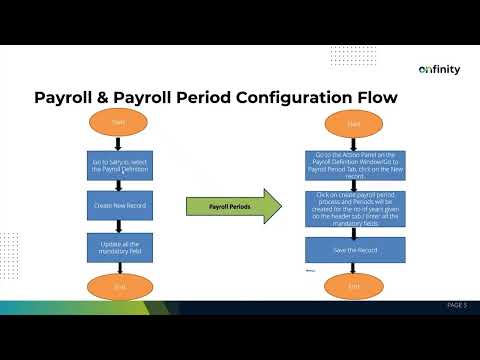
When field crews are scattered across hundreds of kilometres during infrastructure rollouts, labour data fragments across dispatch software, email timesheets, and payroll systems. Finance teams discover cost overruns weeks after they’re locked into timesheets. This breakdown happens predictably when visibility doesn’t span from crew assignment to P&L impact.


Manual reconciliation between attendance logs and payroll calculations slows down HR cycles and introduces errors. Integrated systems capture working hours, overtime, and leave data directly into payroll processing—eliminating handoffs and improving accuracy.


Hard-coded ERP systems trap you in expensive development cycles for simple process changes. Model-driven architecture separates business logic from code, letting finance and operations teams adjust workflows without developer intervention—cutting months from your change timeline and stabilizing total cost of ownership.


Manual attendance logs, disconnected biometric files, and missed punches create payroll delays and salary disputes. Modern ERP systems consolidate attendance data from multiple sources into a single workflow that feeds directly into payroll processing.


Attendance configuration determines whether your ERP captures employee time correctly, integrates with payroll without errors, and supports multiple data capture methods. Learn how proper setup prevents inconsistencies between attendance records and compensation processing.


When physical damage, obsolescence, or market decline reduces an asset’s recoverable value, your ERP must adjust book value and recalculate depreciation automatically. Here’s how the process works end-to-end in a unified system.


Learn how businesses extend ERP systems through configuration instead of custom programming. Model-driven architecture enables teams to create screens, modules, and workflows without writing code or waiting on IT resources.


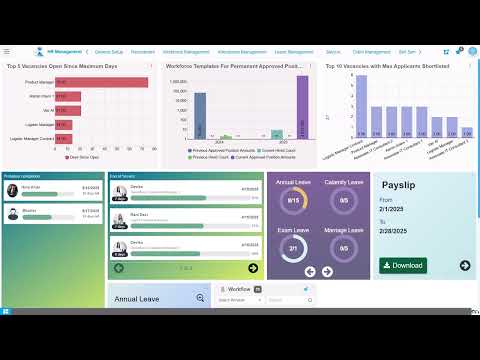
Manual document handling slows down finance, HR, and operations teams. Learn how integrated document management in ERP eliminates scattered file storage, speeds up retrieval, and improves compliance without switching platforms.


Most ERPs flatten nested assembly structures, forcing planners to coordinate sub-assemblies manually and finance to allocate costs across tiers at month-end. Proper multi-level BOQ structure—native to the system—cascades demand through assembly levels, enforces lead-time dependencies, and rolls costs automatically. This shifts your operation from reactive firefighting to predictable planning.


Finance teams managing vendor checks often juggle multiple screens, manual reconciliations, and fragmented workflows. A unified payment interface can consolidate invoice payments, partial allocations, and multicurrency transactions into one streamlined process.


You’re Running a Discrete Manufacturing Operation. Your Systems Aren’t. You’re managing a discrete manufacturing operation with bills of materials (BOMs) that run three, four, sometimes five levels deep. Your spreadsheets are breaking. Your team is drowning in data entry. You’re Read more…


Your business is growing. Revenue’s up, headcount’s doubled, and suddenly you’re managing operations across multiple departments with spreadsheets that are holding everything together with digital duct tape. You’ve got finance teams tracking invoices one way, operations doing inventory another way, Read more…


Are you tired of watching your business’s budget drain away with expensive ERP systems? 🔥 Let’s talk about Reducing Total Cost of Ownership (TCO) with zero-license ERP – a game-changing strategy for smart businesses. The Hidden Money Pit: Traditional ERP Read more…


Are you drowning in per-user licensing costs that are eating your manufacturing firm’s budget alive? 🔥 The Silent Killer of Manufacturing Scaling: Per-User Licensing Costs Manufacturing firms are facing a brutal reality: traditional ERP systems are bleeding companies dry with Read more…


Audit-Ready Electronic Archiving: Transform Your Digital Signature Requirements with Onfinity Ever found yourself drowning in paperwork, stressed about document compliance, and wondering how to keep your digital records bulletproof? The Digital Documentation Dilemma Businesses today face massive challenges with electronic Read more…


Ever wondered how businesses scale from zero to a billion-dollar revenue using robust ERP architectures? Let’s dive into the world of scaling to $1B revenue on a PostgreSQL-backed ERP architecture. The Enterprise Challenge: Breaking Traditional Scaling Barriers Most companies hit Read more…


Ever wondered how businesses can keep their sensitive data locked down within their own regional borders? Sovereign AI ERP is the game-changer that’s transforming how companies protect their business intelligence. The Data Sovereignty Challenge Modern businesses are drowning in data, Read more…


Integrating AURA AI with Legacy SQL Databases: The Hybrid ERP Solution You’ve Been Waiting For Ever felt stuck between your legacy systems and the AI-powered future? You’re not alone. Most businesses struggle with bridging their traditional databases with cutting-edge AI Read more…


Multi-GST and IFRS Compliant ERP: Revolutionising Global Supply Chain Management Are you drowning in complex tax regulations and struggling to keep your global supply chain synchronized? Most businesses feel like they’re fighting an uphill battle against international compliance challenges. The Read more…


Ever wondered how retail brands can seamlessly expand across international markets without getting tangled in complex tax compliance nightmares? Localized GST/VAT compliance for multi-country retail expansion isn’t just a buzzword—it’s a critical challenge for growing businesses. The Multi-Country Tax Compliance Read more…